
The digital landscape is witnessing a significant shift as artificial intelligence (AI) systems increasingly crawl the web, yet they contribute minimally to actual website traffic. According to TollBit’s “State of the Bots Q2 2025” report, Google directs 831 times more visitors to publishers than AI platforms do.
Escalating AI Scraping with Minimal Returns
AI applications are intensifying their web scraping activities without proportionally increasing user referrals. In Q2 2025, AI-driven platforms accounted for a mere 0.102% of referrals, while Google’s share stood at 84.1%, a slight decline from over 90% in Q2 2024. This indicates that for every visitor from an AI system, Google delivered 831.
Surge in AI Bot Traffic
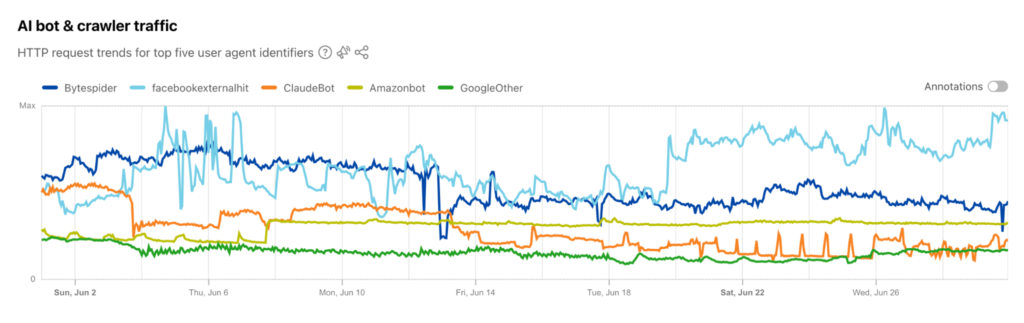
The presence of AI bots on the web has grown substantially. By the second quarter of 2025, AI bots constituted 2% of all web traffic, a fourfold increase from the beginning of the year. Notably, AI bot traffic has now surpassed Bingbot, the world’s second-largest search crawler.
Implications for Publishers
The disparity between AI scraping activities and the traffic they generate poses challenges for content creators. The increased load from AI bots can elevate server costs and complicate content management, especially when these bots disregard protocols like robots.txt. Furthermore, the low referral rates from AI platforms mean that publishers receive minimal traffic in return for their content being used to train AI models.
Strategic Considerations for Marketers
Given the current dynamics, marketers should continue to prioritize traditional search engine optimization (SEO) strategies, focusing on platforms like Google that drive substantial traffic. While AI platforms are evolving, their current contribution to direct website traffic remains limited. Monitoring developments in AI-driven search and adapting strategies accordingly will be essential as the digital ecosystem continues to evolve.
